
Trump told the US to vote like he was on the ballot. They did
Carol Turner Blog
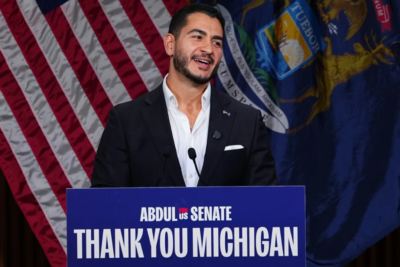

CAROL TURNER shares her enthusiasm for the result of the midterms, whilst cautioning against premature victory celebrations over the end of the Trump era.
Like me, millions of people across the world are celebrating the blow delivered to President Trump and the Maga project in the US midterm elections. Losing both houses was a serious setback for Republicans. Losing them in such numbers was a personal humiliation for Trump – and the success of diverse and progressive candidates rubbed salt in his wounds. That list includes:
- Michigan’s newly-elected Democratic Senator Abdul El-Sayed, who campaigned on a progressive platform featuring Medicare for all and a billionaire wealth tax, to become the first ever Muslim senator in Congress.
- Gina Hinojosa became the first Latino Governor of Texas, and the first Latino woman to hold state office.
- Deb Haaland won in New Mexico to become the first female Native American governor.
- Georgia and Florida each elected their first Black governor, Keisha Lance Bottoms and Byron Donalds.
- Chris Pappas became the first openly gay man elected to the Senate from New Hampshire.
- Xavier Becerra has made history as California’s first elected Latino governor.
- Peggy Flanagan became the first Native American woman to be elected to the US Senate in Minesota.
- James Talarico, another progressive, became the first Democratic senator to represent Texas in the US Senate for 38 years, beating Trump ally Ken Paxton.
- David Crowley became Wisconsin’s first black governor.
- Aaron Ford was elected in Nevada, the state’s first black governor.
- Amy Acton was elected in Ohio, the state’s first female governor.
- Amy Klobuchar was also a female first, elected Governor of Minnesota.
As the extent of the results became clear, former congresswoman Marjorie Taylor Greene, a Republican who lost Trump’s endorsement, tweeted: ‘Tonight was a total referendum on Trump. He told people to vote like he was on the ballot and they did.’
Whatever happens in the next two years, the new Congress will look very different when it convenes on 3 January. It is even suggested that that Hakeem Jeffries, currently House minority leader and leader of the Democratic Caucus since 2023, will make history as the first Black speaker of the House.
A word of caution
Some have described the midterm results as the end of Trump era; others have described President Trump as a lame duck. A word of caution is merited. Trump will find himself constrained. Congress can wield an array of financial powers especially to curb his domestic agenda, but he will fight back. When the Democrats take over in January, Trump still has a significant array of presidential powers to wield particularly on foreign policy.
We should watch out for moves against Cuba or Brazil. Despite rising oil prices – a substantial reason for Trump’s loss of domestic support – we should be prepared for a military riposte on Iran, especially as Prime Minister Netanyahu is pushing for military action. Rising prices are impacting on Trump’s big business backers as well as his base. Blood curdling statements aside, any military action could also be accompanied by US diplomatic shifts on the Strait of Hormuz, a de facto recognition of Iran’s strengthened position after eight months of war.
There could also be pressure from Trump to resolve the Russia-Ukraine conflict, which is what many of his supporters also want. Ironically, there’s a better chance of progress under Trump than is likely under the Democrats. The next round of negotiations is due in Abu Dabi only a week after the midterm results, between representatives of the US, Russia, and Ukraine. They are said to focus on post-war security arrangements, de-escalation, and steps toward ending the conflict, such as energy infrastructure ceasefires, grain exports, and prisoner exchanges. US negotiators will meet with UK, France, Germany, EU, & Nato reps in Brussels ahead of UAE talks.
Next two years
Three further factors make the latter half of Trump’s second term more difficult to call. The first is the state of the Democratic Party, the second is the Republican base, and the third is the impact on international relationships.
Growing dissatisfaction with Trump over cost of living pressures and the impact of Iran on petrol and agricultural prices, meant the Democratics had a relatively easy ride in the midterms, just as Labour did in the 2024 general election. The ruling party had run out of road, and the electorate wanted rid of them.
But Democrats are not united on policy. The Democratic Socialists of America are strengthened and the anti-war voice amplified within the party. But I’ve seen nothing so far to suggest the DSA wing is strong enough to win the day in Democratic deliberations about domestic or foreign policy which must inevitable take place if they’re not to experience the same rejection they did during the presidential campaign of 2024. Traditional Democrats scored points on pocketbook issues in the midterms, but the party focused more strongly on Republican and Trump corruption than on their own economic or social policies. This approach won’t wash into the next presidential election, without clear proposals on health, border control, immigration and other contested issues.
Latent divisions within the Republicans too will sharpen as candidates for the presidential nomination square up, bringing differences into public view. Degrees of ‘distance’ from Trump have already begun to emerge. Marco Rubio and JD Vance are known to be less inclined to military action against Iran, largely differences in method not substance; and Rubio favours a harder line on Cuba as does a large chunk of his Miami electorate.
Discontent has already emerges in the Maga base, resulting in geographical fractures in the midterms. Latino voters in South Texas and the Rio Grande Valley, for example, turned to the Democratic Party in numbers, alienated by the Trump administration’s aggressive ICE enforcement and mass deportations. Exit polls across the US, recorded nearly 9 in 10 voters identifying the cost of living as a ‘crucial’ or ‘major’ factor. Many said they felt worse off than two years ago. This is no guarantee whatsoever that Republican voters will switch allegiance to Democrats though. US party politics is tribal. The impact of Trump’s defeat on international politics has yet to crystalise. For my part, I’ll be studying the election results more closely in the weeks ahead, and keeping a weather eye on responses in Europe, especially the EU-led rearmament project, as well as listening carefully to what China, Russia, and BRICS have to say.